
Northern Pike Habitat, Fishing, and More in New York State
New York State is home to a wide variety of fish, including the northern pike. Found throughout Eurasia and North America, Northern Pike inhabit the majority of Canada and Alaska as well as large parts of the northern United States. This species can be spotted in states such as Vermont, West Virginia, Montana, and Kansas amongst others across the Great Lakes region.
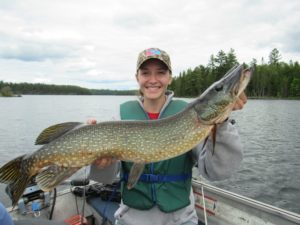
In New York State, most freshwater systems have northern pike habitat, ranging from the lakes and rivers of the Adirondacks to the Finger Lakes region and even many smaller bodies of water. Northern pikes prefer cool, clear, slow-moving water and can grow to a maximum size of up to 36 inches in length. On average, northern pikes live for 8–10 years.
Northern pike are related to other species of fish found in New York including muskellunge (also known as muskie), tiger muskellunge (tiger muskies) chain pickerels, and grass pickerels. All of these species are predatory fish, meaning they feed on smaller fish, amphibians, and other aquatic life.
Northern Pike Identification
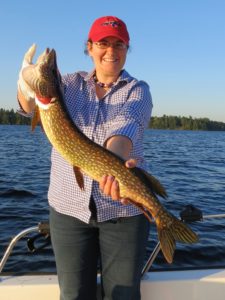
Physical features of the Northern Pike include:
- Average length: 16-22 inches
- Average weight: 2-5 lbs
- Adults have bluish-green with light bean-shaped spots in horizontal rows across the body
- white or yellowish-white underbelly
- Juvenile Northern Pike have distinctive light and dark bars that extend upward from a white underbelly.
- Streamlined, long, slender but muscular, and torpedo-shaped
- The anal fin is large and pointed at the end; the pectoral fins are short and rounded
- Large, wide-set, and sharp teeth.
- Small scales on the head, with larger scales covering the body.
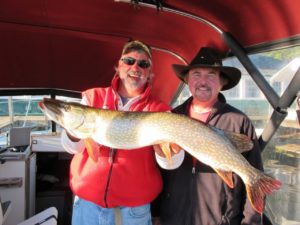
Northern Pike Habitats
Pike inhabit a variety of freshwater habitats, including deep lakes and rivers, shallow ponds and marshes, and even muddy rivers. Although they can tolerate a wide range of water temperatures, clarity, and oxygen content, the absolute ideal temperature for growth is between 64.5F and 70F. Because of this, pikes are often found near the warmest areas of a lake when water temperatures are still relatively cool.
Northern pike prefer aquatic habitats with plenty of underwater vegetation and cover. This provides them with an ideal environment for hunting and ambushing prey. Because they need both deep and shallow water to thrive, pike can be found in areas of a lake or river that have both a deeper main channel and shallow weedy bays.
5 Fishing Spots to find Pike in New York State
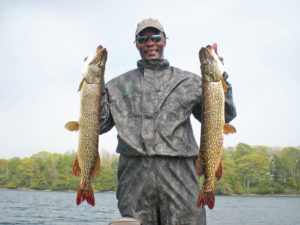
1. Lake George: Located in the Adirondacks, this lake is home to a variety of fish species including northern pike. The lake has an abundance of weedy bays and sheltered coves that are great for pike fishing.
2. Conesus Lake: This Finger Lakes region lake is known for its large population of northern pike. With plenty of weedy bays, shallow flats, and deeper water channels, Conesus Lake is an excellent spot for pike fishing.
3. Oneida Lake: Oneida Lake is one of the largest lakes in New York State and is a great place to catch pike. The lake has long, deep channels, shallow weed beds, and many hidden bays that provide the perfect habitat for pike.
4. Iroquois Lake: Located in the Adirondacks, this lake is populated by pike and provides excellent fishing opportunities. With a mix of weedy bays and open water, Iroquois Lake is a great spot to target northern pike.
5. Chautauqua Lake: This large lake located in western New York is known for its abundant population of northern pike. With plenty of weedy bays and rocky shorelines, it’s a great place to fish for pike.
Northerns are a very widely distributed freshwater fish in New York State. Some other notable places for pike anglers to find these fish include (but are not limited to): Tupper Lake, Lake Champlain, Seneca Lake, Lake Ontario, the Seneca River and the St. Lawrence River.
Natural Prey and Eating Habits of Northern Pike
Overall, northern pike are opportunistic feeders and will consume almost any type of food they can find in their environment. They are considered apex predators due to their large size and powerful jaws that make them one of the top predators in freshwater fish communities.
The size of the prey they consume depends on their own size; larger pike will feed on larger prey while smaller ones consume more minuscule creatures. Pike are especially active during dawn and dusk, when they actively hunt for food in shallow water near shorelines or weed beds. They can be found in deeper water during mid-day when the sunlight is at its strongest.
These pike are ambush predators and like to hide in vegetation or among rocks near the surface waiting for a potential meal to pass by. They are fast and powerful swimmers that can quickly snatch their prey and swallow it whole. When food is scarce, they will also feed on dead fish or other decaying material.
Some of the best natural food sources for pike include:
- Small fish, such as smallmouth bass, yellow perch and fellow pike
- Insects, including dragonflies and caddisflies
- Crustaceans, such as small crayfish
- Frogs and other amphibians
- Aquatic mammals, like mice or muskrats
- Eggs from other fish species
Spawning
Northern pike spawning typically occurs from late April to early June, once water temperatures reach between 40-52°F. The female will lay her eggs in shallow weedy areas or around stumps, logs and vegetation where the male can easily fertilize them.
Male pike linger at the nest for a minimum of two weeks, and up to a month. Despite their presence near the eggs, they do not attempt to protect them – leaving it up to nature alone once spawning is complete. 14-21 days later, the new fry will emerge from their shells.
After hatching, the fry stay in shallow sheltered areas for a few weeks until they are large enough to venture out into deeper waters. The adults then move back into deeper waters to resume their normal behaviors of hunting and feeding to regain their pre-spawn strength. As these pike grow, they become more active predators as they search for food throughout the lake or river system.
Fishing for Northern Pike in NYS
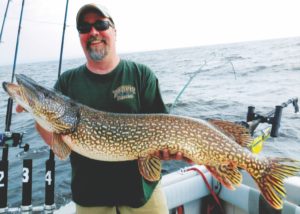
Fishing for pike in New York State can be a rewarding and exciting experience. The best time to fish for pike in NYS is typically late spring and summer when water temperatures start to warm up and they have completed their annual spawning season.
Although northern pike habitat can be found in both shallow, weedy areas and deeper water, the best fishing opportunities in NYS tend to be found in mid-depth areas ranging from 4-15 feet. These depths offer the perfect combination of shallow enough water to locate food sources easily, yet deep enough to stay out of direct sunlight during peak hours of the day.
When fishing for pike in NYS, there are a variety of techniques and lures that can be used to increase your chances of success. Some popular methods include trolling with live bait fish or large spoons, casting with spinners or jigs, float fishing with minnows suspended at mid-depth levels and vertical jigging in deep water.
Ice fishing is a popular way of angling for pike in New York State due to the cold winter temperatures. When the lakes freeze over, the pike will move into shallow weedy areas near shorelines and become more active as they look for food sources. With ice fishing, anglers have access to these areas where they can set up tip-ups and jigging rigs to target the pike. The use of live bait is especially effective when ice fishing for pike, although they will sometimes take lures as well. Most successful ice anglers know when to move around on the lake in order to locate active schools of fish, so having a good knowledge of the lake is key for success.
Regulations for Northern Pike
In New York State, the regulations for fishing for these pike are set by the Department of Environmental Conservation (DEC). The statewide size minimum for all northern pike is 18 inches and any fish under this length must be immediately released back into the water. Each angler is allowed to keep up to 5 pike per day during open season. The open season dates are from May 1st to March 15th.
Some regions have alternative specifications for pike fishing regulations, so it is important to double-check the most recent DEC regulations for your area before you go fishing for these predators.